Categories
brand business marketing organizational strategy

language hinders you from creating for your meaning market

There are product categories and then there are meaning markets. Well, to me there is. I keep coming back to the importance of brands thinking about themselves as having meaning in a greater context. What is the meaning with us? Of course viewed from the other side it’s about what value do I (user) get out of them (brand). And when corporations can ask themselves that question from the perspective of a consumer (customer centricity) is when you start seeing opportunities within a/your meaning market.

Product categories are limiting. Ford as a car brand? Then go ahead and invent better cars (and product innovation is of course needed). Ford as mobility brand? Then it makes perfect sense to team up with (hell they could have started it) Zip Car and help sell transportation by the hour to consumers used to buying music by the song, as Gretchen Effgen, of Zipcar, put it a while back. Joint miles program with air line? Why not.

In digital transformation (i.e. business transformation, mind you) – definitions, perspectives and self perceptions makes all the difference. This, by super smart Deborah Mills-Scofield, I liked:

“There is a balance between using the past to understand the present and guide the future, on the one hand, and on the other, creating something fresh that leaves the old behind. We need analogies to understand the new (eg, horseless carriage) yet they also hold us back by it constraining our thinking (eg, horseless carriage).”

– Deborah Mills-Scofield, In HBR

And if you think that’s only about semantics and words, here’s the knock-you-straight business version from Peter Drucker.

“The greatest danger in times of turbulence is not the turbulence; it is to act with yesterday’s logic.”

Almost all clients I’ve come in contact with and in any way consulted in digital transformation, whether tactical or strategic, the issue has sat there. Definitions. Definitions reinforced by legacy. This keeps you distanced from the future. Regardless of how evenly or unevenly distributed it might be…
Categories
creativity technology video clip

artistry and technology

Many years ago I found myself at the swedish head quarter for ABB in Västerås. ABB, founded back in 1883, is one of the leading makers of advanced robots, amongst other things, focusing on process productivity and the reduction of negative environmental impacts (energy saving etc).

You are greeted by an army of robots, most of them in typical ABB orange, exhibited like pieces of art in glass cases where they showcase advanced operations and exact movements. They are used in the auto industry for example, but play a key role in many other industries where automated processes are needed. The over-all feeling you get is exactly that; heavy industry, factories, big facilities and more than one Terminator flash back.

But art, artists and artistry really make the perfect partnership when it comes to humanising technology and/or showcasing technological capabilities. Add an artist and an idea, and you don’t loose any of the functional capabilities of this robot, but you gain a great deal of emotions. Knowing how much that matters in business (no, humans), it’s easy to see something like this being successful at a trade show.

http://youtu.be/zy2FfMp_tSQ

Artist Alex Kiessling with ABB robot, via post at creative applications

Another (successful at that) example is of course Volvo Trucks and ballerina.

http://youtu.be/1zXwOoeGzys

And on the humanizing robots note, here’s what happens when you attribute human characteristics to machines (anthropomorphism).

“but those little bastards can develop a personality, and they save so many lives.”

Categories
business just a reflection organizational planning strategy

att hitta rätt problemen och att få lösa det

Nyligen diskuterade några gamla kollegor och jag kring detta med konsulters möjlighet, eller omöjlighet att lösa de riktiga problemen efter att ha involverats utifrån en specifik disciplin. Alltså reklambyråer är reklambyråer och löser reklamproblem även om reklamproblemet egentligen är ett annat. Visst finns dessa, men det är inte överdrivet många. Att identifiera ett problem och resonera kring hur lösningen kan se ut, vilket när man nyktert ser på saken ofta är ett par scenarios, inte ofta kan måla upp helt “disciplinfria” scenarios.

Ett tydligt exempel kommer upp. Kundtjänst kostar för mycket och detta måste åtgärdas. Ärendena handlar övervägande om fakturaproblem och missuppfattningar. Problem: fakturan och inte kundtjänst. Lös problemet med otydlig faktura.

Osv.

Kommer att tänka på detta nu när frågan om presstödet är på tapeten.

När presstödet en gång inrättades var problembeskrivningen klar: förstatidningarna var på väg att slå ut andratidningarna…
Nu är det även förstatidningens ställning som är satt under hot, när annonsintäkter försvinner och den digitala omställningen är svår att hantera.

– Cilla Benkö, DN.

Det handlade inte om andratidningen just, utan vad den representerade: en levande journalistik med flera perspektiv. Motsatsen till enkelriktad och ensidig. Varför? För det är en förutsättning för en välfungerande demokrati. Den utsatta andra tidningen var symtomatiskt för problemet. Självklart då, men mindre självklart nu (nu är det mer komplext), men samma grundläggande utmaning består.

Konkreta förslag saknas inte. Det handlar till exempel om att genomföra det av riksdagen beslutade avskaffandet av den orättvisa reklamskatten, samt att momssatsen för digital journalistik inte ska vara högre än för journalistik på papper.

– Cilla Benkö, DN.

Det viktigaste och bästa man kan göra när man letar lösningar, är att återgå till problemet och försäkra sig om att man inte utgår ifrån symtom, utan den faktiska kärnan i problemet. Men hur väl är du positionerad att överhuvud taget få gehör för detta? Ja, har du rullat med vad kunden hela tiden ber om, oavsett om det förefaller rätt eller fel, blir det svårt. Är du för djävla omedgörligt får du aldrig behålla uppdraget. Blandar du bara in människor ifrån ditt skrå, din disciplin, ja då är det svårt att få gehör för annat resonemang.

Vill du lösa de verkliga problemen, bevisa det genom att inte alltid komma dragades med samma gamla problemlösare. Agera tvärdisciplinärt, perspektivskiftande och i mångt och mycket explorativt. Knyt till dig organisationskonsulter. Etc.

Garanterat nya uppfattningar om vad problemet är.

Micco har (självklart) skrivit ett bra inlägg om detta med att ringa in det faktiska problemet. Det jag tänker mycket på, är metoder för att bli personen/organisationen som gärna får göra det.

Har någon tänkt mycket på detta? Droppa en kommentar eller ett mail, why don’t you.

Categories
design technology what is around us

what music looks like

Beautiful thing from Yuri Suzuki – what music looks like. I’d like to see this as an application that plays the music of your surrounding. Imagine temperature, light temperature, how tall the trees are, what color of building facades your surrounded by, weather etc. You see where you are, and can be recorded as a painting or photo with artists interpretation included, but sound is different.

Looks Like Music – Mudam 2013 from Yuri Suzuki on Vimeo.

Picked up at Creative Applications

Categories
digital internet just a reflection media technology

annotations as visible but passive moderator

Comments and commenting on the internet is great, but a nagging issue at the same time. It’s the missing aspect to journalism, seen as it’s societal glue, voice and protector (the good journalism, that is).

The experiment over at Quartz is interesting. Reframing reader input/feedback, ever so slightly, as annotation. Annotations referring to specifics within a text (written text, but this can be applied to any text such as audio, video or any container or format).

Comments and discussions often derail because there’s a delay in one or many comments – from people who get off topic or express out of bounds ideas (bounds being decided both by the editors’ AND the readers’ norms). Before you know it it’s to late to nudge it back.

Reframing comments as annotations keeps discussions, individual comments, much closer to the intentional piece commented on. Feels like there’s something in that. Sort of local hyperlinks, making the comment and commented very visible and chained together.

Keeping it close to subject is important in discussions. Live discussions are often kept on topic by some moderator.If discussions wander off, it’s dealt with quickly and guided back to topic. Impossible in other situations (even video based discussions are hard, due to both technical noise but not seldom a feeling of “they’re so distant so I’ll go on, the risk isn’t huge”), but it feels like annotations is one that might work well for recorded texts.

Categories
business creativity organizational

diversity, collaboration and process – how will it work for you

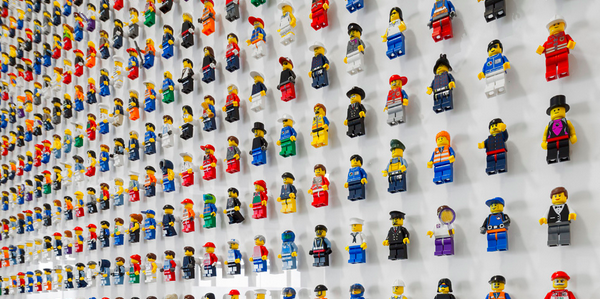
LEGO - figures of sorts
from Lego mini-figures tumblr

Lot’s going on in the creative industries with regards to how we/it works. Reflecting over what’s been taken for granted, what’s been simple for a client to buy (the unfortunate dominance of project over process). How might we make it work better?

A few good reads on the subject:
collaborative innovation, by Saher Sidhom, running and exploring things at Forge, at AMV/BBDO London, from planner.se

A series in Fast Co.Design on ideation, team collaboration, methods and prototyping at Google Ventures. Always sexy to peak inside of that place.
P1. Conducting your own Google Venture design sprint
P2. 6 ingredients to run a design sprint
P3. Building team understanding
P4. 8 steps to creating story boards
P5. Deciding what ideas to prototype
P6. Lightning fast digital prototype
P7. Testing ideas with rapid-fire user study
By Jake Knapp, designer and product development expert at Google Ventures

This thinking about better processes, methods and skill-sets in order to create better ideas, whatever creative industry you’re in, differ. But the common reason for it is about new technologies, speed, transparency, connectivity and a better general understanding of how creativity works.

To me, personally having worked with strategy and ideation in brand communications (indexing quite high), application development and utility/service design, there are a few things that are so very general that it’s pretty obvious that all creative industries will benefit from looking into it. And doing that is so very easy.

Diversity – something many, probably an absolute majority, are crap at. More perspectives will generate more interesting perspectives and reflections. Why is it not a rule to involve outside brains? Easily fixed. Who doesn’t want to get to know more interesting people?

Plan for iteration – things don’t end up the way you want just when you want it. Fact. In a client relationship, a bit tricky to just change, I know, but it can be done. Go from preparing a client to see/hear what solution we have, to preparing them to meet 4 times expected to input on a load of possible solutions. Takes more time, perhaps. Yields better end result, most likely. Demands another remuneration model for many – so fix it. Demands new processes for ideation – shitloads are out there to use. Will mean you see less of some individuals cracking THE solution – yes, those people will be dangerous in more collaborative processes.

Lose the ego – probably the hardest part, see dangerous people in previously (and present) individualist focused industries. Rethink incentives and goals from individual to group. There are professionals that know shitloads about that subject, how to foster collectivistic energy, pride etc. If you haven’t talked to one, you haven’t even taken the first step in even trying.

You could go on of course. But these 3 are sooo very general that there’s not even a question of doing it or not. It’s ridiculous. As they say; “Just do it”.

Categories
digital internet technology what is around us

The invisible impacts of paying a premium price or not

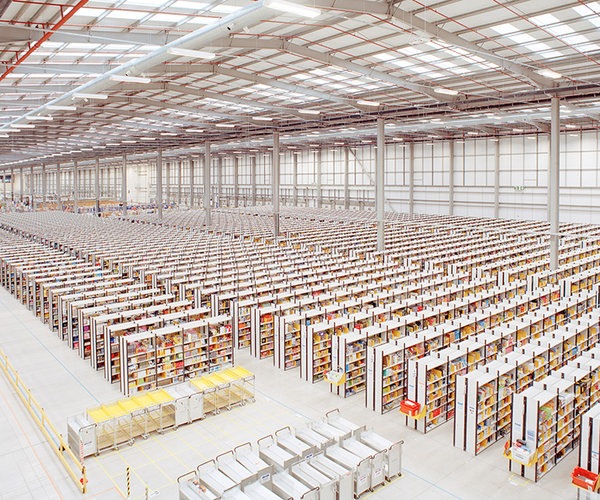
Amazon in Rugeley for the Financial Times Magazine

Photograph by Ben Roberts
From Portrait of Amazon Fullfilment Center, in FastCo Design

When I pay a bit extra for organically grown tomatoes, I know why. When I pay a bit extra for a pair of Nudie jeans, It feels right. When I buy a pair of Crockett and Jones, in 2 years I’m reminded of why.

Many premium prices are strategically and purposefully explained and charged with answers to questions of “why” and “for what”. Quite simply premium brands. The tomatoes are better for me, that feels comforting. The jeans say something about me, which I feel I need for some reason I probably can’t explain very well.

“When you buy something from an independent retailer, you might pay more than Amazon, but that extra bit is an investment,” Roberts explains. “When you pay it, you’re investing in the quality of not only your own life but the life of the community around you.”

– Ben Roberts

But premium prices (can) also do something for others. All businesses impact greater society and hence our purchase decisions. This portrait of an Amazon Fullfilment Center so vividly shows the backside, if you will, of everything that I love with Amazon.

It would feel so much better knowing that only robots were hurt, while paying the lovely low prices, enjoying the frictionless delivery and follow-up of the many books that I buy.

I admit that I feel a bit better when I’m reminded every month of the village and child that I support. But the thing is, of course, that we support (or not) individuals, communities and society in every purchase decision but it’s all invisible.

In a world of increasingly quick and rich feedback loops, personal data, interconnected systems, transparency and information accessibility – I’m waiting for better ways of reminding me of the invisible back-end of the products I buy. In context. Not by way of bi-yearly reports on worker conditions in developing countries and/or what’s happening to our farmers seen as we’ve never payed less, proportionately, for food than today.

I want a friggin connected dashboard on the tomato cans I buy. How’s the farm doing?

Categories
digital internet technology ways of use

do you still rss?

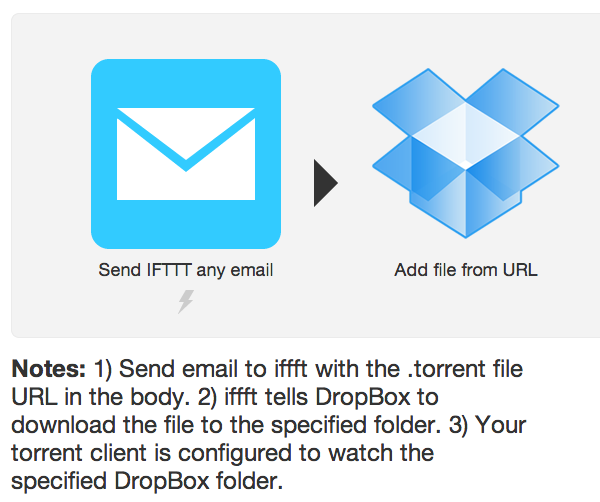
IFTTT trigger service

These two posts:
Douglas Rushkoff – Not Out, Through: The Best Way to Deal With the Onslaught of Technology
Russell Davies – Big up to the rss massive

made me think about me being one of those who’s had to have a good think about what to do after a Google Reader shutdown. I’ve not worried about not finding a good alternative (although probably not as good as the original reader pre-gplus integration). It’s all sorted out-

RSS is one of the best web technologies, if you will, that never hit the masses, and now it seems even more unlikely. When, in fact, it should be the opposite. It’s very much the solution to volumes of crap, irrelevance and time consuming sifting through.

“I love blogging without tweeting about it. I know who I’m talking to – you lot who still do RSS. You’re my people.”

– Russell Davies

I like these things (www.ifttt.com), that I’ve just started mucking about with. A more consumer friendly version of Yahoo Pipes in a sense. If/Then sentences and triggers – the most low-level form of programming. That, I think many people who are unknowing, would actually love and benefit from, and now it’s getting simple and hence useful.

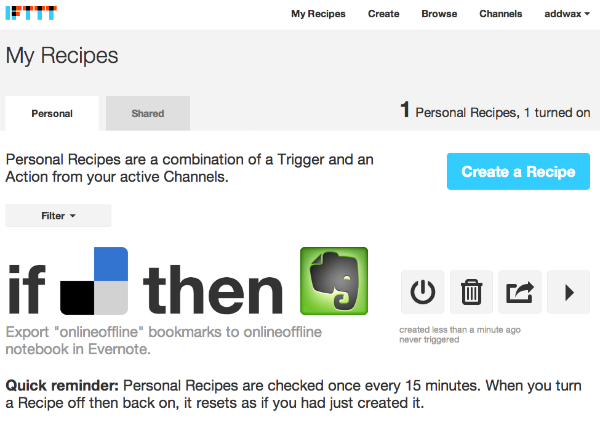
Delicious to Evernote trigger

Categories
advertising flicks just a reflection

personlig kraft, moralisk styrka och ohämmad konsumtion

Ingenting kan hindra er när du inte alls investerar pengarna i en affärsidé, utan ingenting hindrar dig när du sparar hela skiten på postsparbanken.

Det var då det. Personlig styrka och moral, det var eftersträvansvärt. Inte bara en framtidssäkring helt enkelt, med eventuellt förmånliga villkor (vilka ju kunde kommunicerats), utan mer än så. Det sa någonting om din karaktär och styrka. Din mentala styrka till och med. Och med det sagt; vad detta då sade om alla som inte sparade.

Idag ser det lite annorlunda ut, men bygger helt på samma premisser. Realisera ditt drömkök, klart du måste synas med senaste mobilen, självklart ska även du ha segelbåt. Vad säger det annars om dig?

conspicuous consumption

Må hända gör detta, sparandet och konsumerandet, något omedelbart konkret för oss. Men än viktigare säger det mycket om oss. Det är en generalisering av oss. Med kommunikation finns alltid två grupper, oftast samma individer i två roller. Den där vi agerar och den där vi förstår vad agerandet signalerar (att vissa kör Bently och andra cyklar). Den senare rollen in action kallas självklart för “samhället”. Samhället, som för övrigt Tomas Steinfeldts träffsäkert ringar in.

“Det är det väsen som ingen någon gång har sett, hört eller känt, men som ändå behandlas som någonting som existerar i verkligheten: Jag menar samhället…Det bekräftas genom en fungerande offentlighet där det finns tillräckligt många människor som tar sig an vad som händer med de olika grupperna, som uttrycker sin kritik eller sin uppskattning av vad politiken gör, som funderar över världens framtid i allmänhet och marknadens utveckling i synnerhet.”

Tomas Steinfeldt, i DN, ang. tidningens roll

Kul då också att reklamforskning med ett samhälleligt perspektiv verkar vara på framtåg.

Categories
brand business design just a reflection marketing what is around us

brands as a part of our environment and more

Camper is a quirky shoe brand from Mallorca, Spain. You react when you see them, from the characteristic “one-way-show-string” models, to the “rounded soldier boot meet clown shoe” inspired style but perhaps primarily their stores, in which their shoes are presented in a very artful way. It’s somewhat of an experience to browse the models which is nice.

I like the reflection below, about how Camper and its stores is part of the cities they’re in. And when you design a store, you can take cultural (and perhaps even political!) differences into account, hence looking at it from the perspective of adding, changing or commenting something that exists, in the greater context of things. In the case of Camper, using different designers to design stores around globe, resulting in drastically different experiences, it’s
“more a cultural thing”, rather than commercial, says Miguel Fluxá.

When we started to open stores outside Spain we thought it was interesting not to repeat them. The world today is becoming a little bit boring, everything is becoming the same. So we thought it was interesting for the brand, and for the cities, to do different designs from one place to the other. We started to do this many years ago and it’s something that has given us a lot of identity and has worked quite well over the years.

– Miguel Fluxá of Camper, via Dezeen

Camper in-store design
In-store design, from Dezeen.com