
Categories
creativity design digital technology video clip ways of use

design as building invisibility

government uk screen shot

“Something we’re trying to do in particular is let design get out of the way and let the user get to what they want,” Terrett says. “You shouldn’t come to the website and go: ‘wow, look at the graphic design’. We haven’t yet achieved that in most web interfaces; they’re still getting in the way [and] you can see the graphic design everywhere. We need to get past that.”

– Ben Terrett, Government Digital Service, UK

Design is a multifaceted word/occupation/skill/mindset/purpose/tool/thing/etc. Being much about removing as much as possible, making things invisible, takes it into a very interesting place. A place where Google has been for very long, but very few brands would consider worth going. A place where many art directors would freeze to death, yet a place many artists have lived. A place where minimalism is a close relative.

“I don’t know if I want to make any strong predictions, but I hope that technology disappears more and more from my life and you forget that you’re using it all the time instead of feeling like you’re burdened [by it].”

– Alexander Chen, Google Creative Labs

Whether or not this makes you sad, it kinda indicates what you pride yourself in doing, and what design is to you. If design is making things prettier or more useful. One designer (definition 1) could design useful, human centric service, and another designer (definition 2) could make that design “pretty”. Both say they’ve done their “design duties”. Personally, working in strategy, and creativity that activates that for brands, I’m very much for being purpose driven and hence defining what you do by what happens, the outcome. Everything in-between is a means, and really quite unimportant for very long in a project. The in-betweens, for all I care, can be invisible.

“We’re trying to get design out of the way” from Dezeen on Vimeo.

Categories
brand business marketing planning research

innovation, canibalization and re-evaluation

Apple is not only great at finding industries ripe for disruption, but also famous for canibalizing their own range. The iPhone ate the iPod. iPads are very much to blame for decreasing PC sales. The iPad Mini overtakes iPad (Maxi?). The reflex is normally to defend, not kill.

I still, after more than 30 years, don’t know what toothbrush brand I use. Honestly. And I don’t know what toothpaste brand I have at the moment. Honestly. I know it’s either Colgate or Pepsodent. One reason is that I don’t care, but the other is that there’s so much to choose from. I can’t remember ever knowingly having taken the same brand and model (!?) twice unless when it’s 2 for 1. I might be an exception, in which case I’m amazed by the rest of you.

Lately, lots of interesting facts and stats about the sharing of customers and consumers between brands have become available to an audience beyond that of brand planners, researchers, extremely fact hungry marketing specialists and so on. Most notably in his very accessible book “How Brands Grow“, which I recommend to all clients because it makes you think and re-evaluate.

TNS Incremental, argues that they can help identify innovations that drive incremental growth (as opposed to “growth” by way of canibalization), or rejected ideas due to bad total growth result. A pretty important distinction to make, especially in this news, news, news driven world.

Categories
design what is around us

design, design, design

Matches

Design is the bomb. Everybody talks about design. Responsive design. Designing for a digital age. Design thinking. Design thinking in customer experience. The designful company. I guess it risk becoming equally watered out/confusing (or for the initiated; finally as rich and properly defined and filled as it should) as “digital” has been for a while, having been everything from the opposite of analogue, to a mental age, to a skill-set, to a way of thinking, to a type of company, to a word used to sell yourself. Yuk.

Wonderful example of seemingly undesigned or design-unworthy objects from Shane Schneck.

matches

matches again

Or this stuff by Karim Rachid

pot2

Pot by karim rachid

Another Pot by Karim Rachid

Everything obviously needed more design focus than we thought. Little has been well designed enough. Design hasn’t reached the little things enough. Etcetera. Or, I’m fooled by lack of perspective and it actually was but not anymore.
Lot’s of great examples from Fast Co.Design.

Update 2016-10-09:
Artsy got in touch and let me know there’s a page dedicated to Karim Rashid, on Artsy.

Categories
internet just a reflection social media ways of use

over-sharing, filter failure and yahoo

In short, Web 3.0 is fuelling greed for attention (validation) and I felt that I was falling into the same exhibitionist trap as everyone else. I tried to explain this to a journalist who was interviewing me about connectivity last week, but she was having none of it. The future, as far as she was concerned, was social and if you are not part of this epidemic of over-sharing you clearly have something of substance to hide.

Richard Watson, Why I’m feeling anti-social

In Over sharing, “over” is subjective. What is too much for someone is not necessarily too much for someone else (here’s where filter failure sits). The part of over sharing that is the pressure and behavior to publish or share something with frequency just because, as with a news organization which, of course, cannot stand still, I think we’ll see less of (not because “they” post less, but algorithms and filtering – so we’ll see less of it, not exist less of it). However, the simplicity of sharing what is phatic communication isn’t really a decision to produce and post anything of real value, but an instinct and reaction and will continue to overwhelm us.

It is writers, thinkers, publishers who enjoy a following because of their focused and thought through work (presentations, posts, rants etc) who are the root of this very real problem of over sharing. Having a set publishing/post frequency is ridiculous. You simply cannot know you have interesting things to share once a day. And why should you?

I hate the fact that google reader is being discontinued. RSS thinking is the way publishers, bloggers should be thinking and not like news organisations (not entirely true if you make ad money from blogging, and daily visitors count). We’ll hear from you when you have something smart to say, if you don’t, don’t.

I think Yahoo, being much more than search (The core of Yahoo nicely explored here, by Dan Petty), should take it upon them to really innovate in this area. People in some media/communications related industry are devout RSS-users, but the widespread usage is most likely overrated. That should change. On Facebook you don’t go to friends’ profiles to see what’s happened, it shows up. Why should anyone have to go to different websites daily? It’s the content I want, and I want to consume it through one interface/control center. There’s much someone like Yahoo could do here. The advertising issue/possibilities included.

Update 2013-03-26; and yes, Yahoo takes another step on the way in buying Summly. Perhaps.

Categories
design flicks just a reflection what is around us

finding the small, effective, changes amongst the routinely unnoticed

Builder norms and manliness

Striking how deeply ingrained certain things are, and hence how effective it is to break away from those pre-existing truths; mental and social. Like colors for example. Heavy duty stuff should be black and yellow. Hardhats too. Except for this one, demanding attention. Perhaps the company decided to chip in to the gender/socialisation issue. Perhaps Mr or Mrs boss bursted out in a meeting: unicorns shouldn’t be either pink or rainbow colored, and our bags are damn well not going to be orange and black!

It seems like it’s easier to think up big things, big changes, big ideas, big moves, big campaigns, big strategies, big plans. Finding the little things takes just as long to find because they are, per definition, smaller and harder to find. Now back to work, and change the small things that break away from the routinely unnoticed.

Categories
just a reflection marketing media presentation social media

No, you are NOT that important, social media guru

I just got out of a meeting… I’m amazed, but at the same time not surprised, how little many companies and individuals working with technical and social media based marketing solutions and vehicles actually know about the context they operate in. All these visits to agencies, presenting their wonderful solutions that are perfect fits for the highly “engaged consumers” who just want to share, talk, like and follow. Their gadgets, apps and dashboards are not only THE thing to have, generally speaking, it’s actually perfect for helping [enter brand you happen to work with here] reach better loyalty, create and share wonderful stories and drive incremental sales in the millions. 1; As if you know. And 2; who do you take me for?

My advice is to take a month or two to get to know the reality of the other side of the table (you really ought to be interested in it given you’re aiming for it). Get to know what they know, and what it is they are actually providing their clients. One simple way to do this would be to, early on, meet with a few of them and be quite frank. Say you’re working on a thing that is meant to help them. You don’t yet know exactly how much or even how. Interview them. Find out as much as you can about their work, their problems, their clients’ actual problems, their skills. Read some books they say are important in their field. Ask them to explain TO YOU where your idea or solution fits in their work.

Acting like you’re the solution to everything is a disease. It’s bad manners and downright idiotic. That’s why all social media gurus and entrepreneurs working away at solutions for brands and marketing should read Martin Weigel’s presentation. And don’t just read that. Read some of the sources. If not, can you honestly say that you are interested in providing real value instead of a lot of hot air? Can you handle this truth? Does it deter you or inspire you to work up something that’s really in tune with this? Or at least; can you stop talking about yourself as the solution to everything in marketing today, please?

How to (not) Fail from Martin Weigel
Categories
creativity design digital technology video clip ways of use

brutal focus, simplicity and consequence

An example of brutal simplicity and great (for some) value is this little alarm clock that goes off if it’s sunny, and you really should get outside, and doesn’t if the weather is shit. Perfect for weekends and holidays.

Nivea Sun, Sun Alarm App from AgênciaClick Isobar on Vimeo.

do your exercise or experience blackout

Slightly more advanced idea here, but brutally focused and determined to actually work. Many digital services can fail at solving the real “flesh life problem” because they can be forgotten about, overlooked or – due to laziness and self-deception – not used enough or discontinued altogether. Sure, positive motivational drivers can be effective or maybe even more effective than threat of loss, but that’s another discussion.

From PSFK:

The FitBit tracker is able to monitor and log in various activities such as steps taken, amount of sleep, and calories burned. The hack works by connecting WeMo, an Internet-controlled power outlet, to the FitBit device. When a certain goal isn’t achieved, the power outlet automatically turns off, shutting down connected electronic devices like a gaming console, computer, or even the fridge.

The online/offline marriage is really interesting when the two, if you will, have real consequences and effects for each other should [criteria] not be met. The quantified-self-fork from this years’ CES is one example where this is highly relevant. Let’s call it real life gamification, where the game ain’t necessarily all fun…

Categories
flicks just a reflection

bench plus thinking

Benching - a sport

Can’t wait for spring. Nothing works wonders for thinking like spring does. An outdoor bench and time.

Categories
digital internet just a reflection social media technology video clip ways of use

another kind of 2.0

I’ve recently come across quite a few articles and posts about technology, social media and how we use it and how it effects us. Not seldom in a negative way. Unsurprisingly there’s an upswing at the end of a year and beginning of a new. Wise to stop, and reflect over life in general. How to get more time over. Stay in better contact. Or the opposite. There’s this post (swedish) about digital downshifting and how it’s a trend and this post about Adam Brault quitting Twitter for a month, reflecting over the Dunbar number and how twitter is “outsourced schizophrenia”.

Twitter is outsourced schizophrenia. I have a couple hundred voices I have consensually agreed to allow residence inside my brain

In conversations about interfaces, interaction and the roll of the internet in peoples’ lives, I keep arguing that the most used interaction method will be close to invisible. I don’t agree with those saying “touch is the ultimate method” because it demands of me that I’m interested in interacting.

Walking around on a sunday thinking about maybe going to the modern museum doesn’t mean that I want to interact with my fingers – all I want to know is the opening hours and what exhibitions are on. All I need is an answer. In a far future, when a chip is in my brain, and the internet knowledge is indistinguishable from my “flesh knowledge” questions thought are questions asked – and answered. Internet – interacting.

So I found this film very interesting. A very true 2.0 about technology is more about it being a bit boring. It’s when most of it is invisible. When it’s so obvious that we all can do almost everything but why should we.

Connecting (Full Film) from Bassett & Partners on Vimeo.

Categories
advertising brand creativity organizational planning video clip

brands – coming alive to the world!

There were a couple of things shared last week that just made a full circle, like a triangulation that zeroed in on an often discussed matter in advertising (and brand management). That of brands being a bit like humans. Or not. Having POVs on issues, showing humor or not, being in the know and so on. Complex like humans. But let’s not get too deep into that.

Absolute Vodka

Absolute Vodka, with their artistic heritage, doing their view on what’s available to us all; more possibilities than ever to communicate and express our individuality. Less and less must conform to furmulas, more styles are in-style at the same time than ever before. You are never more than a couple of keystrokes or swipes away from your “cultural peer groups” wherever they may be in the world. Individuality and uniqueness for everyone.

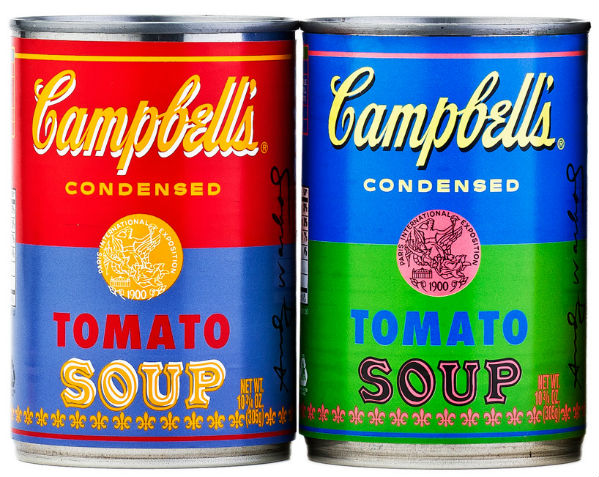
Campbell Soup

Campbell Soup
image source

At first, Campbell opposed the Warhol artwork but thought again. Today, they’re recognizing that the Warhol artwork evokes so much more than a can of soup and welcome being part of pop art history by working with the Warhol Foundation to celebrate the 50 year anniversary. One can only hope they build on that and keep going beyond that, seen as it’s basically a boring ol’ can.

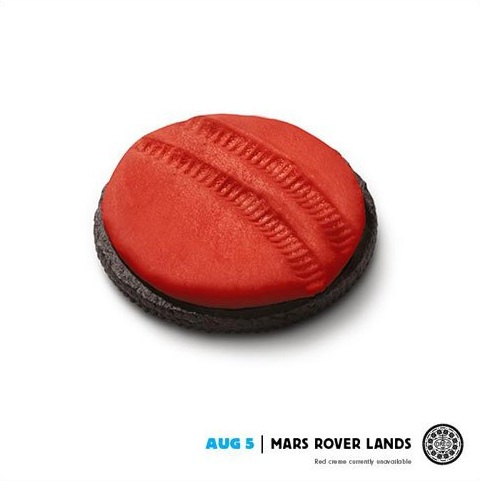
Oreo Cookies

Oreo Mars Rover Ad
image source

Brilliant ads with this little cookie as canvas.

“Oreo turns out to be really respiratory. When it celebrates Elvis, the Mars landings, or Bastille Day, it comes alive to the world around it. Playful, even. After all, who celebrates French holidays? And the brand has recently taken on the image of the Liberty Bell, the Dark Knight, and the Delta Aquarid Meteor Shower.”

– Grant McCracken in HBR

“It comes alive to the world”, what a fitting way to express it. Brands who look outside their immediate self, recognising and tapping into the world around us.

As there is usually a long time-lag between an advertising exposure and the actual act of purchase, effective advertising requires long-term memory (Ehrenberg et al. 1997, p.9). This associations in long-term memory are built on the one hand by repetition and on the other hand through all kinds of other brand exposures, such as WOM, brand usage, POS or even recalling memories. Once associations are stored in the long-term memory, they are hardly ever completely forgotten. As people build highly individualized memory-structures, “[p]ublicizing a brand is [.] about what consumers do with the advertising rather than what advertisements do to consumers […]” (Ehrenberg et al. 1997, p.10). So with long-term memory in mind, advertising’s task is then to find creative ways to publicise the brand, refresh and build new memory traces and “to make the brand distinctive rather than differentiated” (Sharp 2010a, p.353).

http://sophisticated.at/blogs/thomas/2012/09/3-2-1-3-advertising-as-creative-publicity/

Brands can act a bit human in more ways then ever before given social norms soaking the very fabric of most media technologies and platforms for communications. But brands are moved forward by organizations, and those organizations aren’t exactly littered with individuals who understand that we tend to buy more easily from brands who occupy a larger share of our memory. And that those memory structures do not have to be internally worshipped facts about exactly why to buy, and instead be thrilled that “…this ‘mere publicity’ perspective might actually be liberating for creatives, as advertising then becomes “making distinctive and memorable publicity for the brand out of next to nothing” (Ehrenberg quote from Thoma’s thesis).