Categories
digital internet just a reflection media technology

annotations as visible but passive moderator

Comments and commenting on the internet is great, but a nagging issue at the same time. It’s the missing aspect to journalism, seen as it’s societal glue, voice and protector (the good journalism, that is).

The experiment over at Quartz is interesting. Reframing reader input/feedback, ever so slightly, as annotation. Annotations referring to specifics within a text (written text, but this can be applied to any text such as audio, video or any container or format).

Comments and discussions often derail because there’s a delay in one or many comments – from people who get off topic or express out of bounds ideas (bounds being decided both by the editors’ AND the readers’ norms). Before you know it it’s to late to nudge it back.

Reframing comments as annotations keeps discussions, individual comments, much closer to the intentional piece commented on. Feels like there’s something in that. Sort of local hyperlinks, making the comment and commented very visible and chained together.

Keeping it close to subject is important in discussions. Live discussions are often kept on topic by some moderator.If discussions wander off, it’s dealt with quickly and guided back to topic. Impossible in other situations (even video based discussions are hard, due to both technical noise but not seldom a feeling of “they’re so distant so I’ll go on, the risk isn’t huge”), but it feels like annotations is one that might work well for recorded texts.

Categories
business creativity organizational

diversity, collaboration and process – how will it work for you

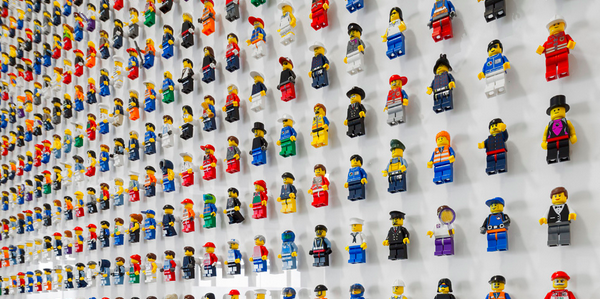
LEGO - figures of sorts
from Lego mini-figures tumblr

Lot’s going on in the creative industries with regards to how we/it works. Reflecting over what’s been taken for granted, what’s been simple for a client to buy (the unfortunate dominance of project over process). How might we make it work better?

A few good reads on the subject:
collaborative innovation, by Saher Sidhom, running and exploring things at Forge, at AMV/BBDO London, from planner.se

A series in Fast Co.Design on ideation, team collaboration, methods and prototyping at Google Ventures. Always sexy to peak inside of that place.
P1. Conducting your own Google Venture design sprint
P2. 6 ingredients to run a design sprint
P3. Building team understanding
P4. 8 steps to creating story boards
P5. Deciding what ideas to prototype
P6. Lightning fast digital prototype
P7. Testing ideas with rapid-fire user study
By Jake Knapp, designer and product development expert at Google Ventures

This thinking about better processes, methods and skill-sets in order to create better ideas, whatever creative industry you’re in, differ. But the common reason for it is about new technologies, speed, transparency, connectivity and a better general understanding of how creativity works.

To me, personally having worked with strategy and ideation in brand communications (indexing quite high), application development and utility/service design, there are a few things that are so very general that it’s pretty obvious that all creative industries will benefit from looking into it. And doing that is so very easy.

Diversity – something many, probably an absolute majority, are crap at. More perspectives will generate more interesting perspectives and reflections. Why is it not a rule to involve outside brains? Easily fixed. Who doesn’t want to get to know more interesting people?

Plan for iteration – things don’t end up the way you want just when you want it. Fact. In a client relationship, a bit tricky to just change, I know, but it can be done. Go from preparing a client to see/hear what solution we have, to preparing them to meet 4 times expected to input on a load of possible solutions. Takes more time, perhaps. Yields better end result, most likely. Demands another remuneration model for many – so fix it. Demands new processes for ideation – shitloads are out there to use. Will mean you see less of some individuals cracking THE solution – yes, those people will be dangerous in more collaborative processes.

Lose the ego – probably the hardest part, see dangerous people in previously (and present) individualist focused industries. Rethink incentives and goals from individual to group. There are professionals that know shitloads about that subject, how to foster collectivistic energy, pride etc. If you haven’t talked to one, you haven’t even taken the first step in even trying.

You could go on of course. But these 3 are sooo very general that there’s not even a question of doing it or not. It’s ridiculous. As they say; “Just do it”.
Categories
digital internet technology what is around us

The invisible impacts of paying a premium price or not

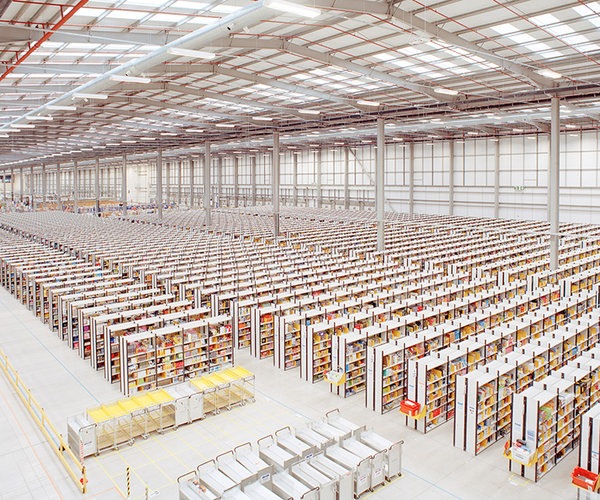
Amazon in Rugeley for the Financial Times Magazine

Photograph by Ben Roberts
From Portrait of Amazon Fullfilment Center, in FastCo Design

When I pay a bit extra for organically grown tomatoes, I know why. When I pay a bit extra for a pair of Nudie jeans, It feels right. When I buy a pair of Crockett and Jones, in 2 years I’m reminded of why.

Many premium prices are strategically and purposefully explained and charged with answers to questions of “why” and “for what”. Quite simply premium brands. The tomatoes are better for me, that feels comforting. The jeans say something about me, which I feel I need for some reason I probably can’t explain very well.

“When you buy something from an independent retailer, you might pay more than Amazon, but that extra bit is an investment,” Roberts explains. “When you pay it, you’re investing in the quality of not only your own life but the life of the community around you.”

– Ben Roberts

But premium prices (can) also do something for others. All businesses impact greater society and hence our purchase decisions. This portrait of an Amazon Fullfilment Center so vividly shows the backside, if you will, of everything that I love with Amazon.

It would feel so much better knowing that only robots were hurt, while paying the lovely low prices, enjoying the frictionless delivery and follow-up of the many books that I buy.

I admit that I feel a bit better when I’m reminded every month of the village and child that I support. But the thing is, of course, that we support (or not) individuals, communities and society in every purchase decision but it’s all invisible.

In a world of increasingly quick and rich feedback loops, personal data, interconnected systems, transparency and information accessibility – I’m waiting for better ways of reminding me of the invisible back-end of the products I buy. In context. Not by way of bi-yearly reports on worker conditions in developing countries and/or what’s happening to our farmers seen as we’ve never payed less, proportionately, for food than today.

I want a friggin connected dashboard on the tomato cans I buy. How’s the farm doing?

Categories
digital internet technology ways of use

do you still rss?

IFTTT trigger service

These two posts:
Douglas Rushkoff – Not Out, Through: The Best Way to Deal With the Onslaught of Technology
Russell Davies – Big up to the rss massive

made me think about me being one of those who’s had to have a good think about what to do after a Google Reader shutdown. I’ve not worried about not finding a good alternative (although probably not as good as the original reader pre-gplus integration). It’s all sorted out-

RSS is one of the best web technologies, if you will, that never hit the masses, and now it seems even more unlikely. When, in fact, it should be the opposite. It’s very much the solution to volumes of crap, irrelevance and time consuming sifting through.

“I love blogging without tweeting about it. I know who I’m talking to – you lot who still do RSS. You’re my people.”

– Russell Davies

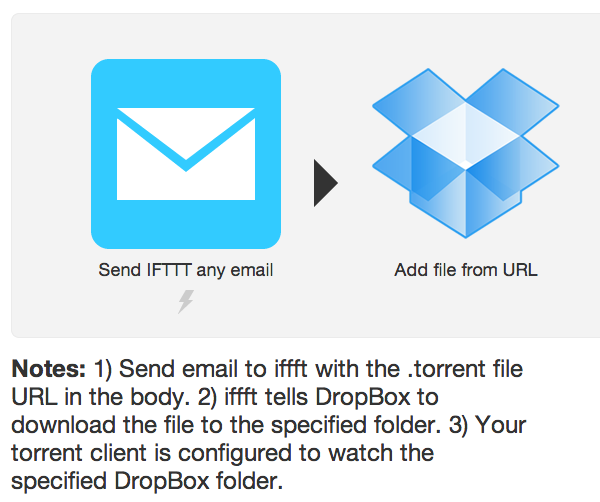
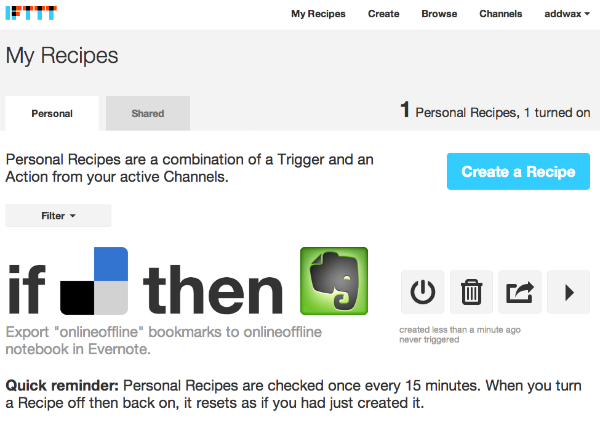
I like these things (www.ifttt.com), that I’ve just started mucking about with. A more consumer friendly version of Yahoo Pipes in a sense. If/Then sentences and triggers – the most low-level form of programming. That, I think many people who are unknowing, would actually love and benefit from, and now it’s getting simple and hence useful.

Delicious to Evernote trigger

Categories
advertising flicks just a reflection

personlig kraft, moralisk styrka och ohämmad konsumtion

Ingenting kan hindra er när du inte alls investerar pengarna i en affärsidé, utan ingenting hindrar dig när du sparar hela skiten på postsparbanken.

Det var då det. Personlig styrka och moral, det var eftersträvansvärt. Inte bara en framtidssäkring helt enkelt, med eventuellt förmånliga villkor (vilka ju kunde kommunicerats), utan mer än så. Det sa någonting om din karaktär och styrka. Din mentala styrka till och med. Och med det sagt; vad detta då sade om alla som inte sparade.

Idag ser det lite annorlunda ut, men bygger helt på samma premisser. Realisera ditt drömkök, klart du måste synas med senaste mobilen, självklart ska även du ha segelbåt. Vad säger det annars om dig?

conspicuous consumption

Må hända gör detta, sparandet och konsumerandet, något omedelbart konkret för oss. Men än viktigare säger det mycket om oss. Det är en generalisering av oss. Med kommunikation finns alltid två grupper, oftast samma individer i två roller. Den där vi agerar och den där vi förstår vad agerandet signalerar (att vissa kör Bently och andra cyklar). Den senare rollen in action kallas självklart för “samhället”. Samhället, som för övrigt Tomas Steinfeldts träffsäkert ringar in.

“Det är det väsen som ingen någon gång har sett, hört eller känt, men som ändå behandlas som någonting som existerar i verkligheten: Jag menar samhället…Det bekräftas genom en fungerande offentlighet där det finns tillräckligt många människor som tar sig an vad som händer med de olika grupperna, som uttrycker sin kritik eller sin uppskattning av vad politiken gör, som funderar över världens framtid i allmänhet och marknadens utveckling i synnerhet.”

Tomas Steinfeldt, i DN, ang. tidningens roll

Kul då också att reklamforskning med ett samhälleligt perspektiv verkar vara på framtåg.

Categories
creativity design digital technology video clip ways of use

design as building invisibility

government uk screen shot

“Something we’re trying to do in particular is let design get out of the way and let the user get to what they want,” Terrett says. “You shouldn’t come to the website and go: ‘wow, look at the graphic design’. We haven’t yet achieved that in most web interfaces; they’re still getting in the way [and] you can see the graphic design everywhere. We need to get past that.”

– Ben Terrett, Government Digital Service, UK

Design is a multifaceted word/occupation/skill/mindset/purpose/tool/thing/etc. Being much about removing as much as possible, making things invisible, takes it into a very interesting place. A place where Google has been for very long, but very few brands would consider worth going. A place where many art directors would freeze to death, yet a place many artists have lived. A place where minimalism is a close relative.

“I don’t know if I want to make any strong predictions, but I hope that technology disappears more and more from my life and you forget that you’re using it all the time instead of feeling like you’re burdened [by it].”

– Alexander Chen, Google Creative Labs

Whether or not this makes you sad, it kinda indicates what you pride yourself in doing, and what design is to you. If design is making things prettier or more useful. One designer (definition 1) could design useful, human centric service, and another designer (definition 2) could make that design “pretty”. Both say they’ve done their “design duties”. Personally, working in strategy, and creativity that activates that for brands, I’m very much for being purpose driven and hence defining what you do by what happens, the outcome. Everything in-between is a means, and really quite unimportant for very long in a project. The in-betweens, for all I care, can be invisible.

“We’re trying to get design out of the way” from Dezeen on Vimeo.

Categories
design what is around us

design, design, design

Matches

Design is the bomb. Everybody talks about design. Responsive design. Designing for a digital age. Design thinking. Design thinking in customer experience. The designful company. I guess it risk becoming equally watered out/confusing (or for the initiated; finally as rich and properly defined and filled as it should) as “digital” has been for a while, having been everything from the opposite of analogue, to a mental age, to a skill-set, to a way of thinking, to a type of company, to a word used to sell yourself. Yuk.

Wonderful example of seemingly undesigned or design-unworthy objects from Shane Schneck.

matches

matches again

Or this stuff by Karim Rachid

pot2

Pot by karim rachid

Another Pot by Karim Rachid

Everything obviously needed more design focus than we thought. Little has been well designed enough. Design hasn’t reached the little things enough. Etcetera. Or, I’m fooled by lack of perspective and it actually was but not anymore.
Lot’s of great examples from Fast Co.Design.

Update 2016-10-09:
Artsy got in touch and let me know there’s a page dedicated to Karim Rashid, on Artsy.

Categories
creativity design digital technology video clip ways of use

brutal focus, simplicity and consequence

An example of brutal simplicity and great (for some) value is this little alarm clock that goes off if it’s sunny, and you really should get outside, and doesn’t if the weather is shit. Perfect for weekends and holidays.

Nivea Sun, Sun Alarm App from AgênciaClick Isobar on Vimeo.

do your exercise or experience blackout

Slightly more advanced idea here, but brutally focused and determined to actually work. Many digital services can fail at solving the real “flesh life problem” because they can be forgotten about, overlooked or – due to laziness and self-deception – not used enough or discontinued altogether. Sure, positive motivational drivers can be effective or maybe even more effective than threat of loss, but that’s another discussion.

From PSFK:

The FitBit tracker is able to monitor and log in various activities such as steps taken, amount of sleep, and calories burned. The hack works by connecting WeMo, an Internet-controlled power outlet, to the FitBit device. When a certain goal isn’t achieved, the power outlet automatically turns off, shutting down connected electronic devices like a gaming console, computer, or even the fridge.

The online/offline marriage is really interesting when the two, if you will, have real consequences and effects for each other should [criteria] not be met. The quantified-self-fork from this years’ CES is one example where this is highly relevant. Let’s call it real life gamification, where the game ain’t necessarily all fun…

Categories
digital internet just a reflection social media technology video clip ways of use

another kind of 2.0

I’ve recently come across quite a few articles and posts about technology, social media and how we use it and how it effects us. Not seldom in a negative way. Unsurprisingly there’s an upswing at the end of a year and beginning of a new. Wise to stop, and reflect over life in general. How to get more time over. Stay in better contact. Or the opposite. There’s this post (swedish) about digital downshifting and how it’s a trend and this post about Adam Brault quitting Twitter for a month, reflecting over the Dunbar number and how twitter is “outsourced schizophrenia”.

Twitter is outsourced schizophrenia. I have a couple hundred voices I have consensually agreed to allow residence inside my brain

In conversations about interfaces, interaction and the roll of the internet in peoples’ lives, I keep arguing that the most used interaction method will be close to invisible. I don’t agree with those saying “touch is the ultimate method” because it demands of me that I’m interested in interacting.

Walking around on a sunday thinking about maybe going to the modern museum doesn’t mean that I want to interact with my fingers – all I want to know is the opening hours and what exhibitions are on. All I need is an answer. In a far future, when a chip is in my brain, and the internet knowledge is indistinguishable from my “flesh knowledge” questions thought are questions asked – and answered. Internet – interacting.

So I found this film very interesting. A very true 2.0 about technology is more about it being a bit boring. It’s when most of it is invisible. When it’s so obvious that we all can do almost everything but why should we.

Connecting (Full Film) from Bassett & Partners on Vimeo.

Categories
advertising brand creativity organizational planning video clip

brands – coming alive to the world!

There were a couple of things shared last week that just made a full circle, like a triangulation that zeroed in on an often discussed matter in advertising (and brand management). That of brands being a bit like humans. Or not. Having POVs on issues, showing humor or not, being in the know and so on. Complex like humans. But let’s not get too deep into that.

Absolute Vodka

Absolute Vodka, with their artistic heritage, doing their view on what’s available to us all; more possibilities than ever to communicate and express our individuality. Less and less must conform to furmulas, more styles are in-style at the same time than ever before. You are never more than a couple of keystrokes or swipes away from your “cultural peer groups” wherever they may be in the world. Individuality and uniqueness for everyone.

Campbell Soup

Campbell Soup
image source

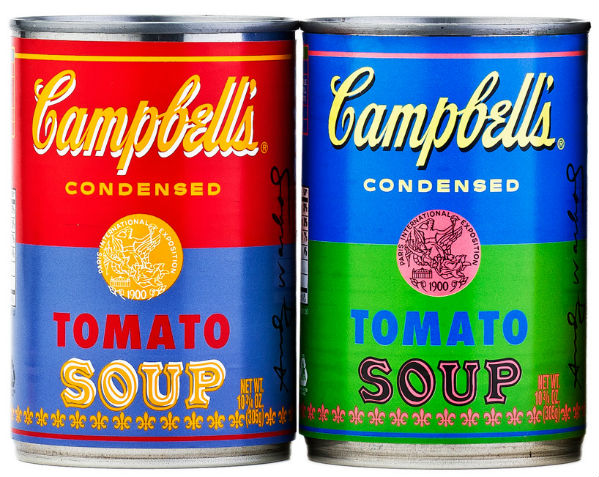
At first, Campbell opposed the Warhol artwork but thought again. Today, they’re recognizing that the Warhol artwork evokes so much more than a can of soup and welcome being part of pop art history by working with the Warhol Foundation to celebrate the 50 year anniversary. One can only hope they build on that and keep going beyond that, seen as it’s basically a boring ol’ can.

Oreo Cookies

Oreo Mars Rover Ad
image source

Brilliant ads with this little cookie as canvas.

“Oreo turns out to be really respiratory. When it celebrates Elvis, the Mars landings, or Bastille Day, it comes alive to the world around it. Playful, even. After all, who celebrates French holidays? And the brand has recently taken on the image of the Liberty Bell, the Dark Knight, and the Delta Aquarid Meteor Shower.”

– Grant McCracken in HBR

“It comes alive to the world”, what a fitting way to express it. Brands who look outside their immediate self, recognising and tapping into the world around us.

As there is usually a long time-lag between an advertising exposure and the actual act of purchase, effective advertising requires long-term memory (Ehrenberg et al. 1997, p.9). This associations in long-term memory are built on the one hand by repetition and on the other hand through all kinds of other brand exposures, such as WOM, brand usage, POS or even recalling memories. Once associations are stored in the long-term memory, they are hardly ever completely forgotten. As people build highly individualized memory-structures, “[p]ublicizing a brand is [.] about what consumers do with the advertising rather than what advertisements do to consumers […]” (Ehrenberg et al. 1997, p.10). So with long-term memory in mind, advertising’s task is then to find creative ways to publicise the brand, refresh and build new memory traces and “to make the brand distinctive rather than differentiated” (Sharp 2010a, p.353).

http://sophisticated.at/blogs/thomas/2012/09/3-2-1-3-advertising-as-creative-publicity/

Brands can act a bit human in more ways then ever before given social norms soaking the very fabric of most media technologies and platforms for communications. But brands are moved forward by organizations, and those organizations aren’t exactly littered with individuals who understand that we tend to buy more easily from brands who occupy a larger share of our memory. And that those memory structures do not have to be internally worshipped facts about exactly why to buy, and instead be thrilled that “…this ‘mere publicity’ perspective might actually be liberating for creatives, as advertising then becomes “making distinctive and memorable publicity for the brand out of next to nothing” (Ehrenberg quote from Thoma’s thesis).